
All Categories
Cart (0)

Your cart is empty
Add some items to get started
Your cart is empty
Add some items to get started
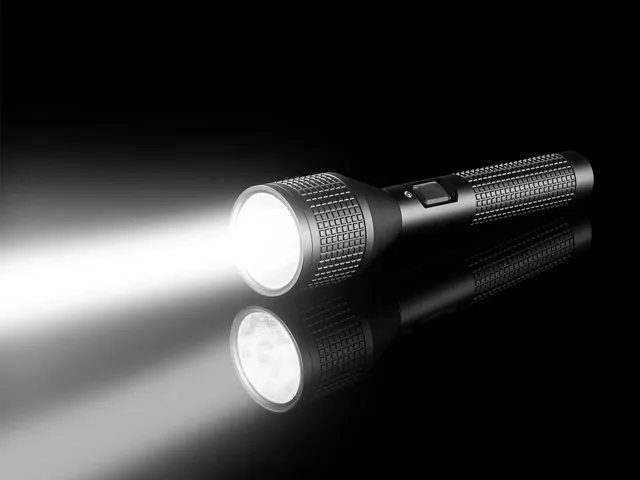
Every home needs portable lighting. But should you buy a torch, a headlamp, or both? The answer depends entirely on how you'll use it. Let's compare features, use cases, and hidden advantages you might not have considered.
Headlamps excel at hands-free tasks. Setting up a tent in darkness? Cooking at a campsite? Reading during a power outage? A headlamp leaves both hands free while lighting exactly where you're looking. Our multifunctional headlight is perfect for camping, hiking, and mining — activities where freeing your hands improves both safety and convenience. The adjustable beam angle lets you direct light precisely without tilting your whole head.
LED torches offer superior power and distance. When you need to illuminate distant objects — spotting trail markers at night, identifying animals on a forest path, signaling for help — a torch wins. The Zoom LED Torch Light XH-P50 throws light up to 200 meters, more than ten times what any headlamp achieves. The zoom function lets you switch between floodlight (wide area) and spotlight (long distance) instantly.
Brightness measured in lumens matters. A 500-lumen torch illuminates a room clearly. 200 lumens works for reading. Below 100 lumens is emergency-only. Our XH-P50 delivers 500 lumens — bright enough to light up a backyard, campsite, or dark staircase safely. Compare this to typical phone flashlights (30-50 lumens) that barely illuminate beyond arm's reach.
Battery considerations vary dramatically. Headlamps running on AAA batteries (like our CY2068-B) offer convenience — batteries are everywhere, you can carry spares cheaply, and dead batteries don't make the device useless. But battery life suffers at higher brightness. LED torches with USB charging (like our XH-P50) offer consistent output until battery death, then require hours to recharge. Keep spare AAA batteries for headlamps; pre-charge USB torches before trips.
IPX waterproof ratings for outdoor use. IPX4 handles splashes (light rain, kitchen accidents). IPX6 survives heavy rain and hose spraying. Neither is submersible. Our XH-P50 torch is IPX6-rated — ideal for Nepal's monsoon treks where sudden downpours are guaranteed. The headlamp has no official rating but handles light rain with careful port covering. For river crossings or fishing, neither is submersible — seek IPX7 or IPX8 for underwater use.
Special features worth extra cost. The XH-P50 includes red light mode — crucial for night hiking where white light destroys night vision and disturbs wildlife. The traffic control wand (included) turns it into an emergency signal for roadside breakdowns. The COB (Chip-on-Board) LED provides wide floodlight coverage, while the P50 LED handles distant spotting. For headlamps, look for tilt adjustments, red light modes, and lockout features to prevent accidental activation in bags.
Real-world runtimes vs. advertised claims. Manufacturers test at minimum brightness. The XH-P50's "8 hours" means at low setting. At full 500 lumens, expect 1.5-2 hours. Headlamps at full brightness drain AAA batteries in 2-3 hours. For multi-day treks, bring spare batteries or a power bank. For emergency home use, brightness matters less than longevity — keep headlamps on lower settings during extended power outages.
Weight and comfort for extended wear. A 300g headlamp becomes uncomfortable after hours. Our CY2068-B headlamp is lightweight with adjustable elastic straps. The separate battery pack (some models) balances weight better than all-front designs. For all-night use (camping, night fishing, cave exploration), weight distribution matters as much as brightness. Try before buying — a comfortable headlamp gets used; an uncomfortable one stays in the drawer.
Which one should you buy first? For general home use: start with a USB rechargeable torch. It handles power outages, backyard needs, and car emergencies better than a headlamp. For outdoor enthusiasts: prioritize a headlamp for hands-free camp tasks, then add a torch for distance needs. For professional use (electricians, mechanics, miners): buy both — headlamps for close work, torches for inspections and signaling.
Our recommendations by use case: For home emergency kit — XH-P50 torch (NPR 550) with USB charging and red light mode. For camping and hiking — CY2068-B headlamp (NPR 400) plus spare AAA batteries. For professionals (electricians, mechanics, security) — both: headlamp for wiring work, torch for perimeter checks. For night fishing — headlamp for tackle work, torch for spotting shoreline structures.
The best lighting tool is the one you have when darkness falls. Start with one quality option based on your most common need, then add the second when budget allows. Both together cost under NPR 1000 — less than a single restaurant meal — yet they might save you from dangerous situations or just make life dramatically easier during Nepal's frequent power fluctuations.
Visit our store to compare brightness levels side-by-side. Seeing 500 lumens versus 200 lumens in person helps enormously. We'll help you choose based on your specific home, work, or adventure needs.